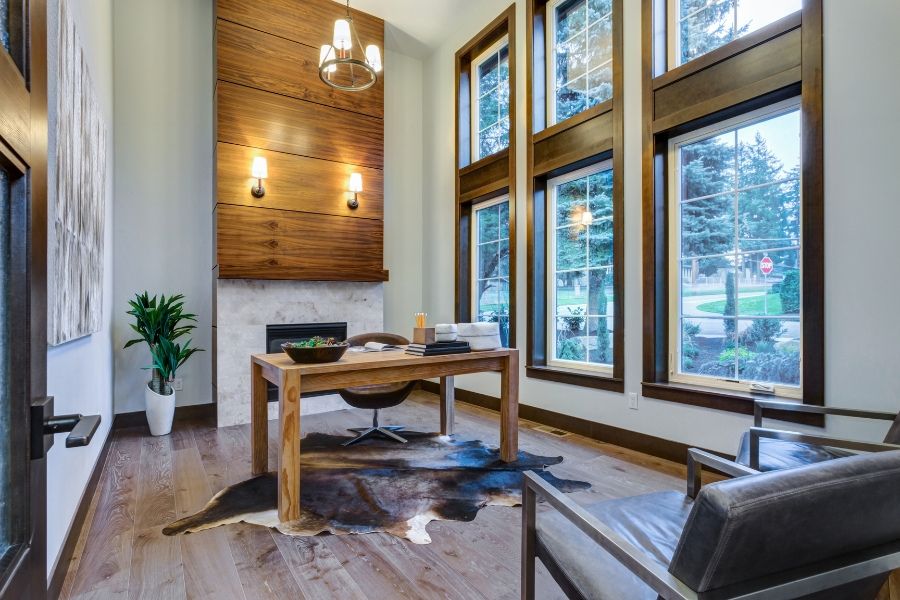
How to Design a Home Office That Feels Professional and Personal
What Are Some Tips for How to Design a Home Office?
When thinking about how to design a home office, you should start by focusing on how you actually work each day.
That being said, your office should support your routine, give you enough privacy, and make it easy for you to stay organized.
It should also feel comfortable and reflect your style without looking cluttered or distracting.
In any case, a good home office balances function and personality.
That means choosing the right location, planning a layout that makes daily tasks easier, adding smart storage, and paying attention to lighting and comfort.
What’s more, custom features like built-in shelving or cabinetry can also help create a more polished and practical space that fits your home.
Key Takeaways:
- Start by thinking about how you work, what you need, and how you’ll use the space
- Choose a location that gives you privacy, focus, and access to good natural light
- Plan the layout carefully so your desk, storage, and lighting support your workflow
- Use storage solutions to reduce clutter and keep the space looking clean and professional
- Add personal style through materials, finishes, and décor choices that feel warm but still polished
If you work from home, your office affects more than how your space looks.
It affects how you focus, how organized you stay, how comfortable you feel during the day, and even how confident you appear on calls or in meetings.
And that’s why learning how to design a home office is so important.
A good home office should help you work efficiently and look polished, while still feeling like it belongs in your home.
It should support the way you work without feeling cold, awkward, or disconnected from the rest of your space.
With that in mind, here’s how to create a home office that feels both professional and personal:
Start With How You Actually Work
Before you think about finishes, shelves, or décor, start with function.
In doing so, you might want to ask yourself a few simple questions, like:
- Do I take a lot of video calls?
- How many hours per day do I spend in my office?
- Do I need storage that stays hidden, or open shelving to keep things within reach?
- Do I mostly work on a computer, or do I also need room for paperwork, tools, etc.?
These questions matter because your home office should be built around your daily routine.
Someone who spends most of the day on Zoom, for instance, will need a different setup than someone using the room for design work, admin tasks, or managing a business from home.
And a person working with files and supplies will need more storage than someone using a laptop and notebook.
In any case, when you begin the process by considering how the space needs to function, then design decisions become much easier.
Choose the Best Spot for Focus and Privacy
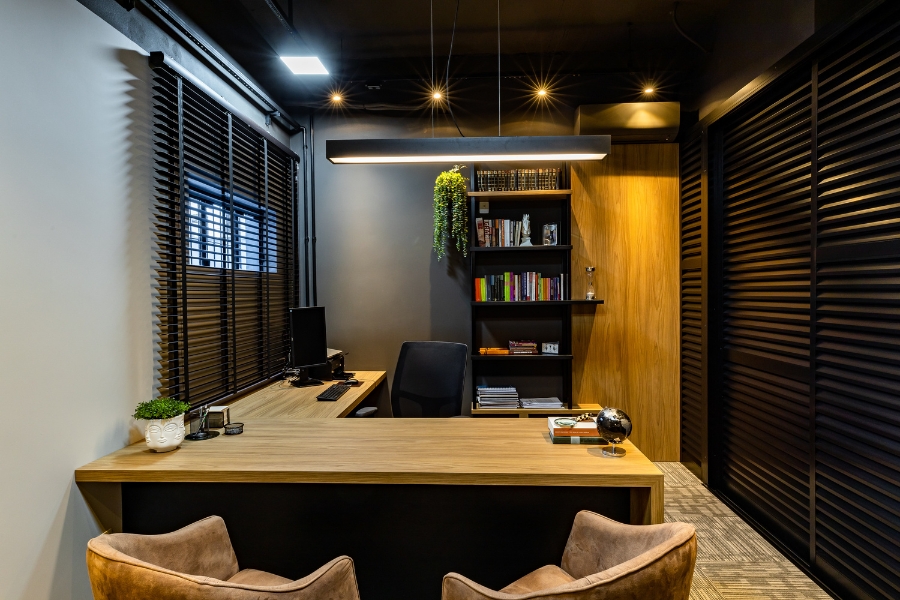
The location of your home office can make a big difference.
Some people have a dedicated room, while others are working with a spare bedroom, a basement corner, or a section of a larger living area.
Any of these can work, but the space needs to support concentration.
So, make sure to look for a spot with as much privacy as possible.
Think about noise, foot traffic, natural light, and how often other people move through the area.
If you’re trying to work in a place where people are constantly passing by, it will be harder to stay focused and keep a professional appearance during meetings.
Natural light also helps, as a brighter room often feels more comfortable and easier to work in for long periods of time.
That being said, too much glare can be a problem, especially if your desk faces a window or your computer screen picks up reflections.
At any rate, the right location doesn’t have to be large. It just needs to work well for you.
Plan a Layout That Makes Daily Work Easier
A home office can look great and still be frustrating to use if the layout is off.
Desk placement is one of the first things to think through because you want enough room to work comfortably, move freely, and reach what you need without constant shifting and stretching.
Think about where your desk should go in relation to the door, windows, lighting, and storage.
And if you’re often on video calls, your background matters, too.
A clean wall, well-built shelving, or simple cabinetry behind you often looks far more polished than a busy room or having random household items in view.
The layout should also reduce friction for you during the workday.
That means keeping everyday items close by, allowing enough surface space for the tasks you do most often, and making sure the room does not feel cramped.
Truth be told, even a smaller office can feel more functional when the layout has been carefully thought out.
Use Storage to Keep Your Space Looking Professional
Clutter is one of the fastest ways to make a home office feel stressful and unfinished.
Papers pile up, supplies get scattered, cords become visible, and before long, the room stops supporting your work and starts getting in the way.
That’s why storage matters so much.
A professional-looking office usually has a place for everything. That can include drawers, built-in shelving, cabinets, printer storage, filing space, and closed compartments for anything you do not want left out in the open.
And this is where custom woodworking can make a real difference.
Off-the-shelf furniture often leaves wasted space, especially in smaller rooms, alcoves, or offices with unusual dimensions.
But when you opt for custom shelving and cabinetry, it can be built to fit the exact space, which helps the room feel more finished and more useful.
This can also help your office blend in better with the rest of your home.
Because instead of looking like you pushed a few pieces of furniture into a corner, the space feels more intentional.
And that’s important when you want the room to feel professional but still warm and personal.
Make It Feel Personal Without Losing the Polished Look
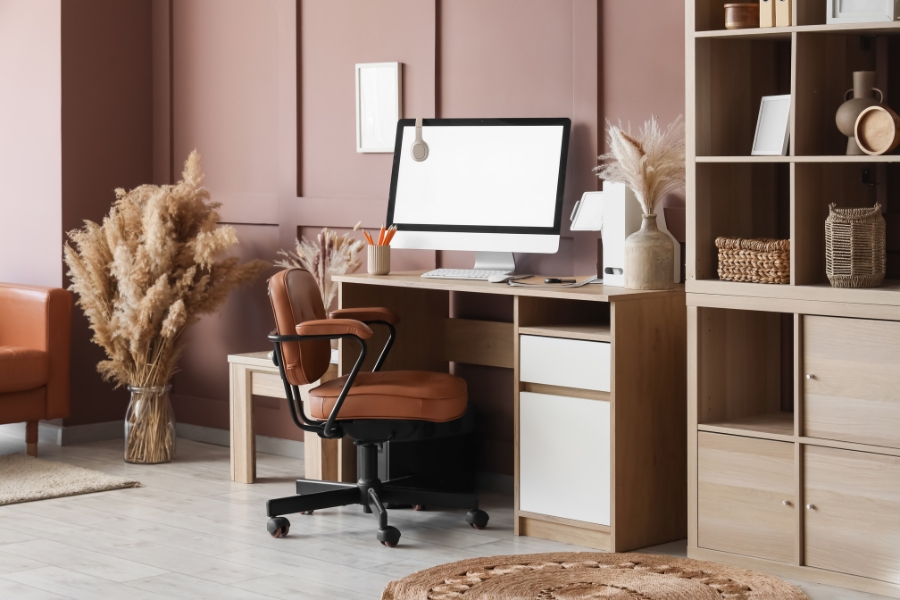
A home office should not feel sterile.
You’re spending hours upon hours there, so it should reflect your style and feel comfortable.
The goal is not to make it look like a corporate cubicle. It’s to create a space that supports your work while still feeling like your own.
And this is where materials, finishes, and smaller design choices come in.
Wood tones can add warmth, built-in cabinetry can make the room feel more cohesive, and open shelving allows you to display a few books, framed pieces, or meaningful objects that bring character to your space.
Colour also plays a role here, but you don’t need bold design choices for the room to feel personal.
Even subtle tones, textures, and finishes can help your office feel more inviting.
The key is to be selective.
Too many decorative items can distract from the purpose of the room, and a few thoughtful details usually work better than trying to fill every wall and shelf.
Don’t Overlook Comfort and Lighting
A beautiful office won’t help you much if it’s uncomfortable to work in.
And if you spend several hours a day in your office, small discomforts add up quickly.
So, comfort needs to be part of the design from the start.
That includes a supportive chair, the right desk height, good lighting, and enough room to work without feeling boxed in.
Lighting also deserves special attention.
Natural light is helpful, but it’s not enough on its own.
You also need proper task lighting for darker days, early mornings, or evening work.
Overhead lighting, a desk lamp, and carefully placed accent lighting can help the room feel both functional and finished.
You also need to think about power access, too.
Where will your computer, printer, lamp, and chargers plug in?
Will cords stay visible, or can they be easily hidden?
These details often get ignored until the space is already in use, so planning for them early on can help you avoid frustration later.
Think About What You’ll Need a Year From Now
This might seem irrelevant, but if you want to learn how to design a home office, you should start thinking about what you’ll need in the future.
Maybe you’ll end up taking on more clients, maybe you’ll need more storage, or maybe the room will need to support more equipment, more paperwork, or a second function over time.
Whatever the case, it helps to think ahead before final decisions are made.
That might mean adding more cabinetry than you need today, choosing more durable materials that will hold up better, or creating flexible storage that can adapt as your work changes.
This is another reason why custom woodwork solutions often make sense.
Because when your office is built around how you live and work, it’s easier to create something that will still serve you well in the future.
Work With a Professional for a Better Fit
Designing a home office is not just about buying a desk and putting up a few shelves.
It’s about creating a space that fits your home, your work, and your day-to-day needs.
And typically, this is hard to achieve with generic furniture alone.
With that in mind, a skilled woodworker can help you think through layout, storage, materials, and built-in features that will make your home office more functional and cohesive.
The result is often a space that feels better to work in and looks more connected to the rest of your home.
And that’s important, regardless of whether you’re setting up a fully dedicated office or making the most of a smaller area.
Because when the design is thoughtful and the craftsmanship is strong, your office does more than hold your work. It supports it.
A well-designed home office should help you stay organized, focused, and comfortable while still feeling like a natural part of your home.
So, if you’ve been wondering how to design a home office that feels professional and personal, start with function, plan for storage, choose materials carefully, and think beyond temporary fixes.
The right design can change how the room works and how you feel in it every day.
And when you want a space that truly fits your home and your workflow, custom woodworking can help you bring it all together.
Ready to create a home office that works as hard as you do?
Our master woodworker, Andy Ingram, has over 30 years of experience. For more details, contact us or check out our portfolio to see what we’re capable of creating.